Key Features & Benefits
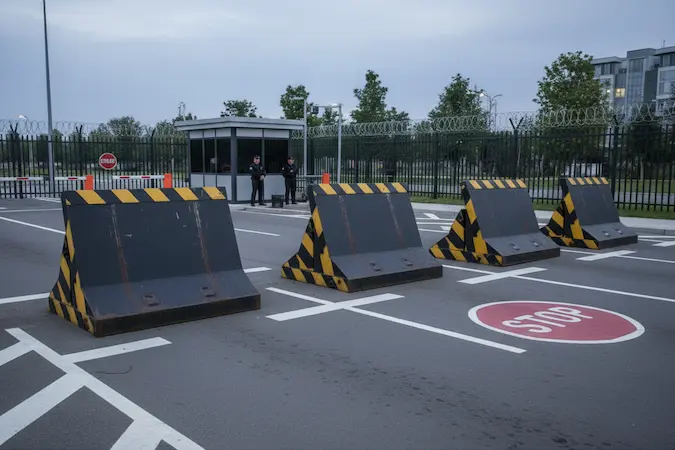
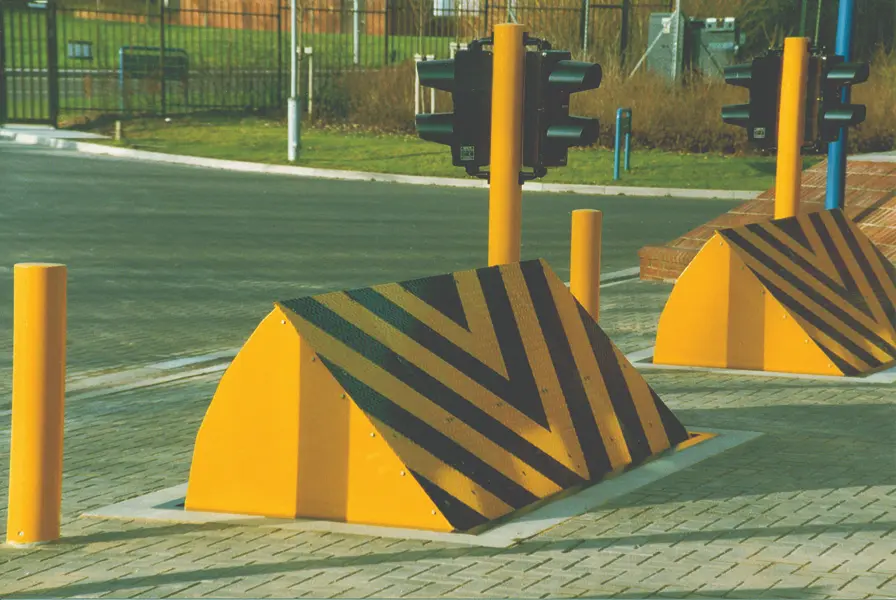
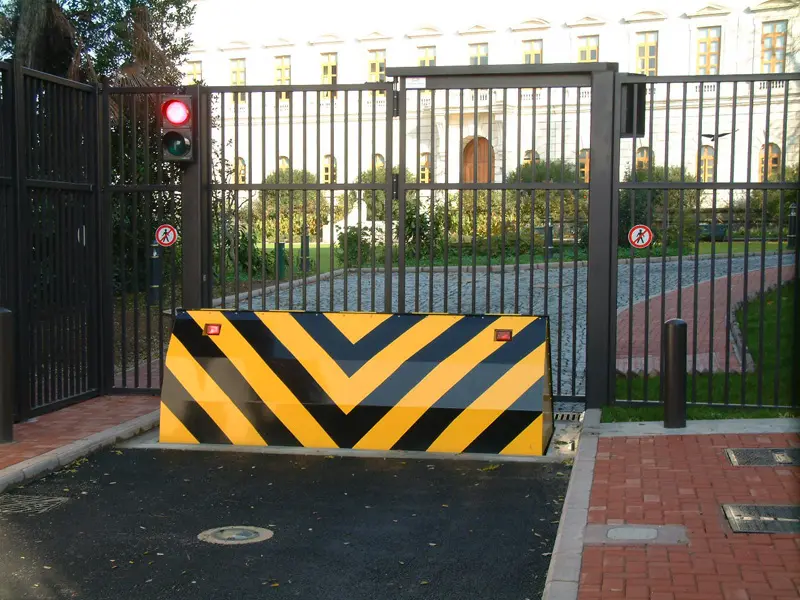
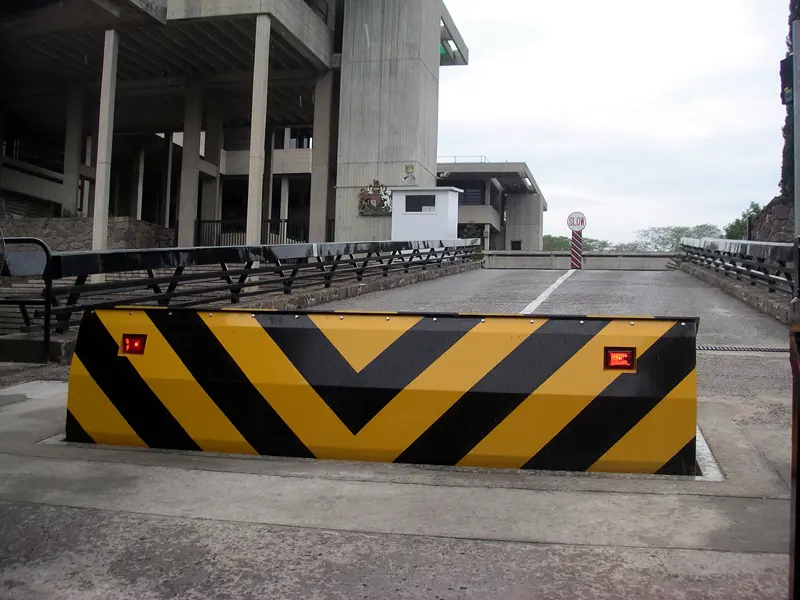
- K4 (M30 equivalent) crash-rated HVM configuration
- Heavy-duty construction for high-security vehicle access
- Fast operation for controlled entry and emergency response
- PLC, remote-control and manual override options
- Corrosion-resistant construction for demanding GCC environments
- Integration with access-control and perimeter-security systems
Security Benefits
- Helps mitigate hostile vehicle intrusion
- Supports controlled high-security vehicle access
- Integrates with ANPR, RFID and security-control systems
- Designed for reliable operation and long-term serviceability
K4 Crash Rated Road Blocker Technical Specifications
| Parameter |
Specification |
| Crash Rating |
K4 (M30 equivalent) |
| Height Above Ground |
600–900 mm |
| Width |
1200–2000 mm (site-specific) |
| Material |
MS with anti-corrosive coating / SS304 / SS316 |
| Operation Type |
Hydraulic / Electromechanical / Fixed |
| Power Requirement |
230V / 415V (3-phase) |
| Control System |
PLC Control / Remote Operation / Manual Override |
Technical specifications may vary according to the selected configuration,
site conditions and project requirements.
Typical Applications
- Government Buildings & Diplomatic Facilities
- Defence & Military Installations
- Airports, Seaports & Transportation Hubs
- Oil, Gas & Petrochemical Facilities
- Data Centres
- Critical Infrastructure Facilities
- Industrial Facilities
- Corporate & High-Security Campuses
Standards & Compliance
- K4 crash-rating classification
- ASTM F2656 terminology: M30 equivalent
- IWA 14-1 vehicle security barrier testing framework
- ISO 9001:2015 quality management system
Applicable crash-test certification and technical documentation
depend on the selected model and project requirements.
Installation & Maintenance
Installation of a K4 crash rated road blocker requires an engineered
civil foundation, appropriate drainage and utility provisions, and
correct integration with the control system. Installation requirements
vary according to the selected configuration, site conditions and
approved engineering drawings.
Typical Maintenance Requirements
- Routine inspection of structural and moving components
- Inspection of hydraulic components and fluid levels where applicable
- Periodic checking of PLC, sensors and electrical connections
- Inspection for corrosion, wear and physical damage
- Replacement of worn or damaged components as required