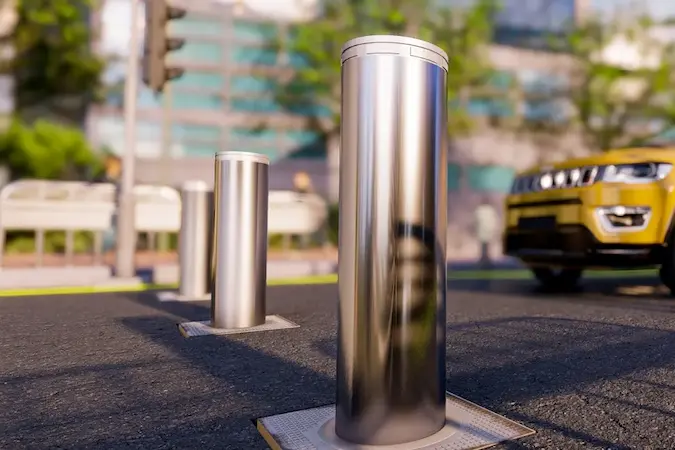
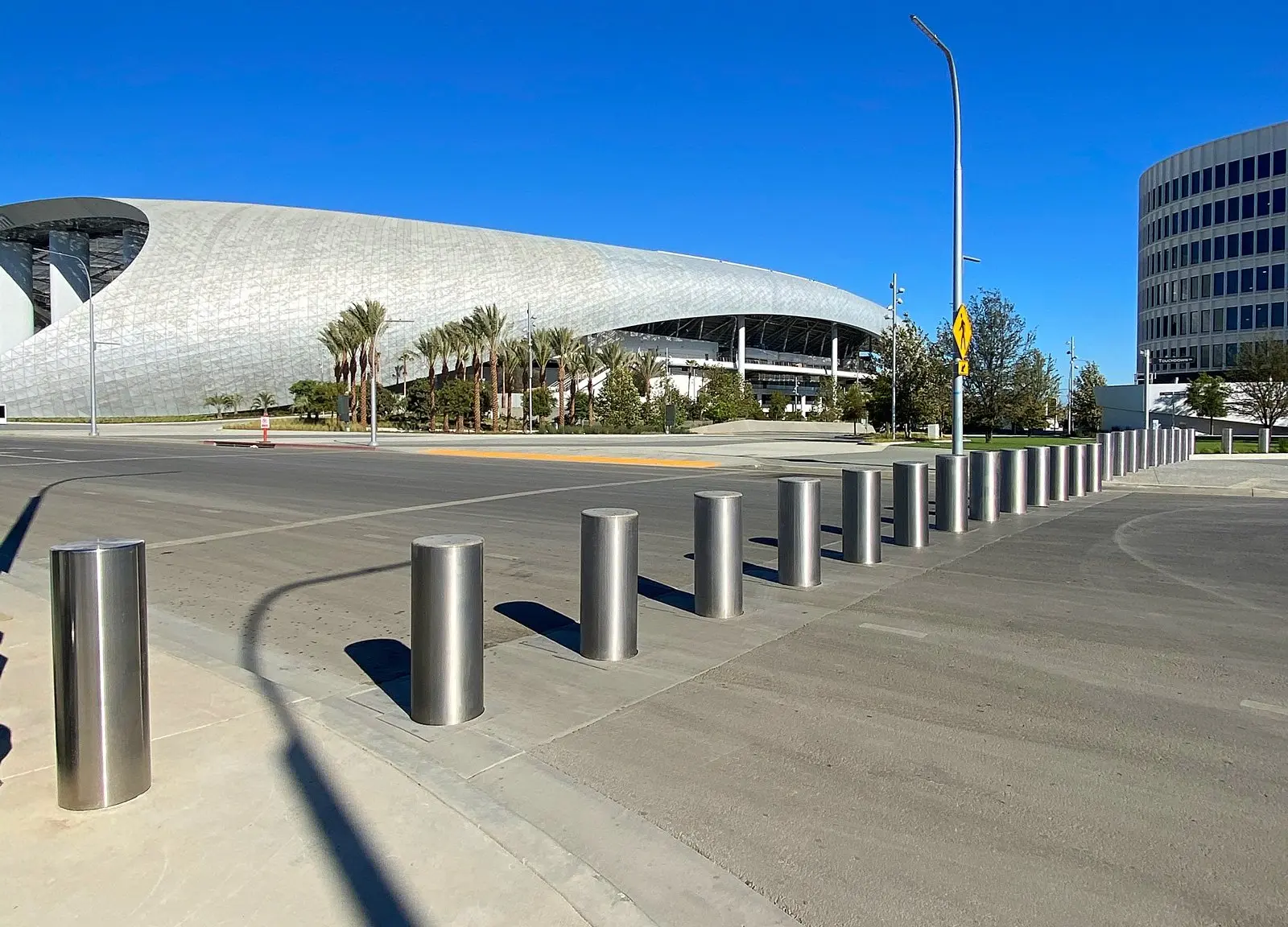
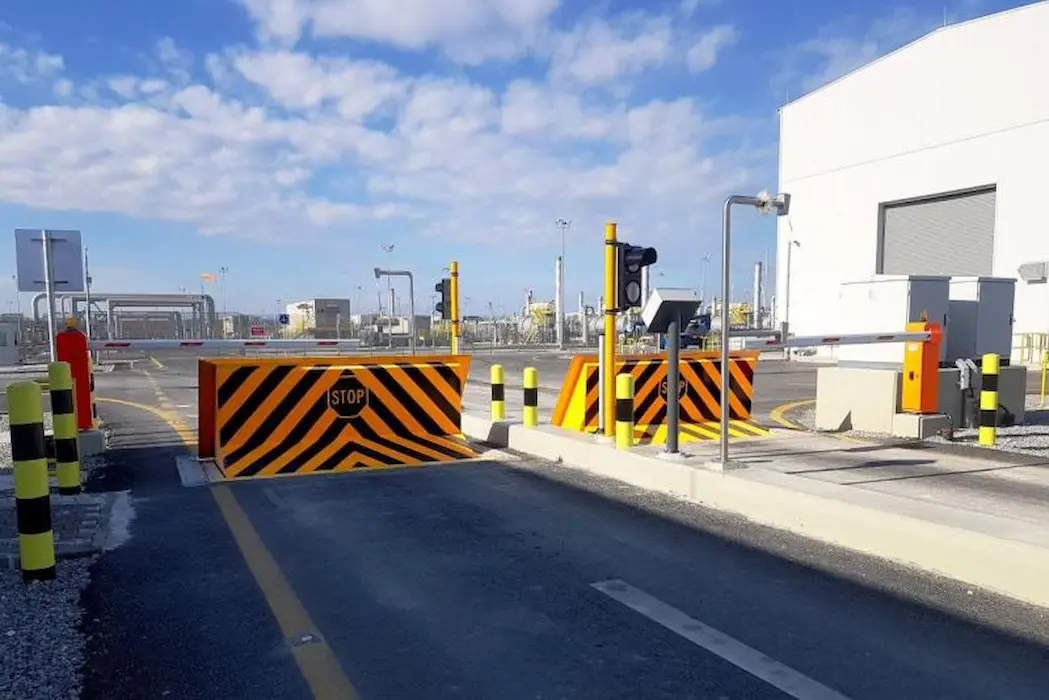
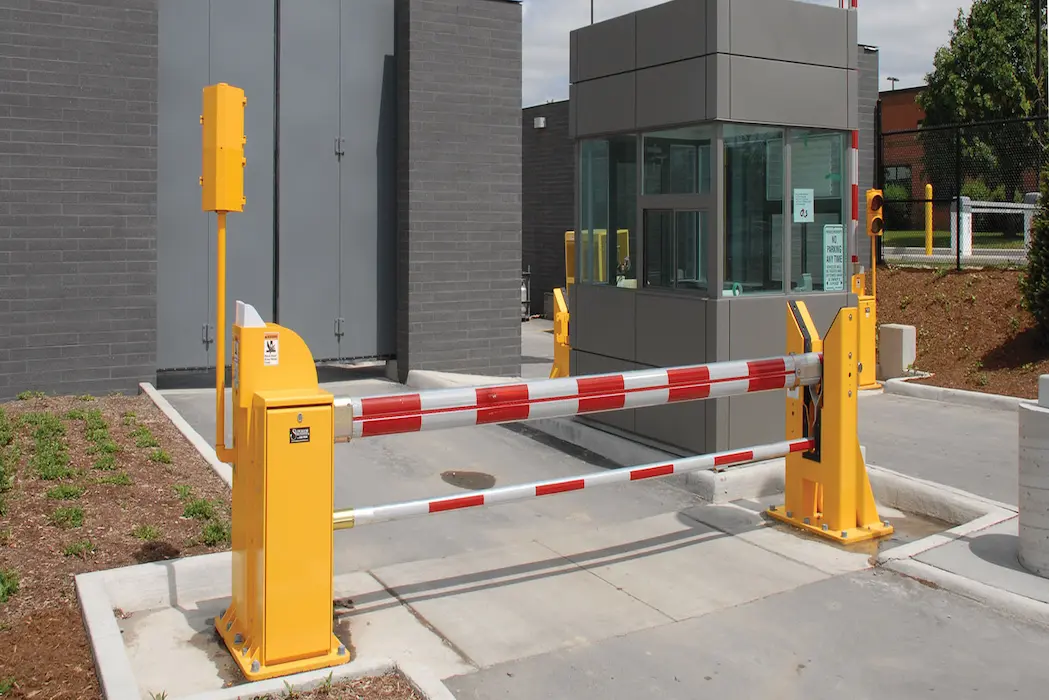
Key Features & Benefits
- K4, K8 and K12 crash-rated configurations
- Heavy-duty security construction
- Automatic and fixed configurations
- Hydraulic operation options
- PLC and remote-control integration
- Corrosion-resistant finish options
- Access-control integration capability
Security Benefits
- Helps mitigate vehicle-borne threats
- Maintains controlled vehicle access
- Suitable for layered perimeter protection
- Integrates with wider security systems
Technical Specifications
| Parameter |
Specification |
| Crash Rating |
K4 / K8 / K12 |
| Height Above Ground |
600–900 mm (configurable) |
| Diameter |
220–275 mm |
| Material |
MS with anticorrosive coating /
SS304 / SS316
|
| Operation |
Hydraulic / Pneumatic / Fixed |
| Power Supply |
230V / 415V |
| Control |
PLC / Remote / Manual override |
Typical Applications
- Government Buildings & Embassies
- Defence & Military Facilities
- Airports & Transportation Hubs
- Oil & Gas Facilities
- Data Centers
- Critical Infrastructure
- Corporate Campuses
- Public & High-Security Spaces
Standards & Compliance
- ASTM F2656
- PAS 68
- IWA 14-1
- ISO 22343-1:2023
Applicable test standard and crash rating depend
on the selected bollard model and project specification.
Installation & Maintenance
Installation requirements vary according to bollard
type, foundation depth, site conditions, drainage,
electrical provisions and project specification.
Appropriate civil preparation and professional
commissioning are required for reliable operation.
Typical Maintenance Requirements
- Routine structural and operating inspection
- Hydraulic system inspection where applicable
- Electrical and control-system diagnostics
- Cleaning and corrosion inspection
- Preventive maintenance according to site conditions